
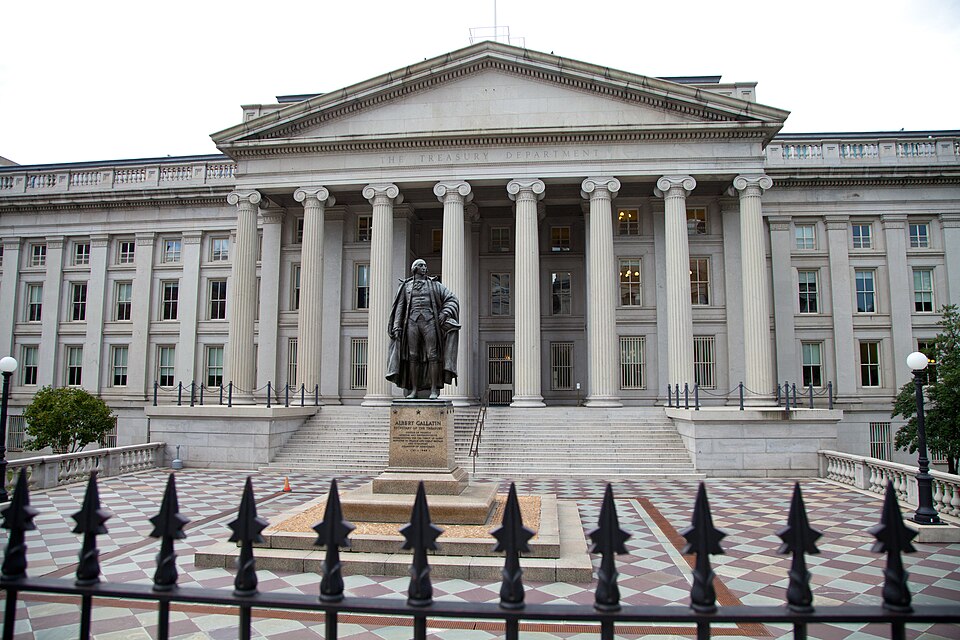
The U.S. government’s reliance on debt markets to finance its operations reached a new scale in the first quarter of fiscal year 2024, when the Treasury borrowed $776 billion between October and December 2023. That figure, reported by the Treasury Borrowing Advisory Committee, reflects the federal government’s ongoing need to raise cash through the sale of marketable securities, a process that has become central to funding deficits. The borrowing occurs against a backdrop of rising interest costs and a suspended debt limit that frees the Treasury to issue debt without restriction until January 1, 2025.
The Machinery of Federal Debt Issuance
The Treasury raises cash by selling three main types of marketable securities, each tailored to different financing horizons. Treasury bills are short-term instruments with maturities ranging from 4 weeks to 52 weeks, used primarily to cover immediate cash needs.
Notes run from 2 to 10 years, and bonds stretch out to 20 and 30 years, allowing the government to lock in longer-term financing. Auctions follow a regular cadence: bills go to market weekly, while notes and bonds are auctioned monthly. The Bureau of the Fiscal Service runs these auctions, and the Treasury’s Quarterly Refunding announcements outline borrowing plans for the coming quarter.
In November 2023, the Treasury announced it would increase auction sizes for longer-term securities, a signal to markets that the government expects deficits to remain large. That decision came as the average interest rate on marketable debt rose to roughly 3.1% in fiscal year 2023, up sharply from 1.9% in fiscal year 2022.
Each new dollar of debt now costs more to service, a dynamic that taxpayers, investors, and the broader economy must absorb. As of early 2024, the Treasury’s cash balance at the Federal Reserve stood at roughly $750 billion, a key metric that investors will track in coming months.
Historical Roots and Modern Implications
The U.S. Treasury traces its origins to the early days of the republic, created by Congress in 1789 to manage government revenue and establish financial stability. Alexander Hamilton, the first secretary of the treasury, shaped the nation’s early fiscal system, including the issuance of debt to fund operations and the creation of a national bank.
Over time, the department expanded its role to oversee tax collection, currency production, and the management of federal borrowing. Today, the Treasury’s borrowing mechanisms are central to funding federal operations, as the government relies on debt markets to cover deficits. The debt limit is not a current constraint.
The Fiscal Responsibility Act of 2023 suspended the borrowing cap until January 1, 2025, allowing the Treasury to issue debt without restriction until then. That suspension removes a source of uncertainty that in past years forced the Treasury to take extraordinary measures to avoid default.
With the cap lifted, the focus shifts to the trajectory of borrowing and the cost of servicing the national debt.
What to Watch Next
Investors will closely monitor the Treasury’s Quarterly Refunding announcements for updated borrowing estimates. The cash balance at the Fed — that $750 billion figure — will remain a key metric, as it indicates the Treasury’s ability to meet near-term obligations without further market disruption.
The higher average interest rate, now 3.1% versus 1.9%, means each new dollar of debt costs more to service, a trend that affects federal spending and the broader interest rate environment. The auctions continue. The bills, notes, and bonds keep coming to market.
For now, the Treasury’s borrowing operation hums along, a practical consequence of a government that spends more than it collects. The process affects taxpayers, who ultimately bear the cost of interest payments, and investors, who buy the securities and help set the yields.
As the debt limit suspension runs through early 2025, the Treasury’s borrowing strategies and auction processes will remain a key driver of national fiscal policy.




