
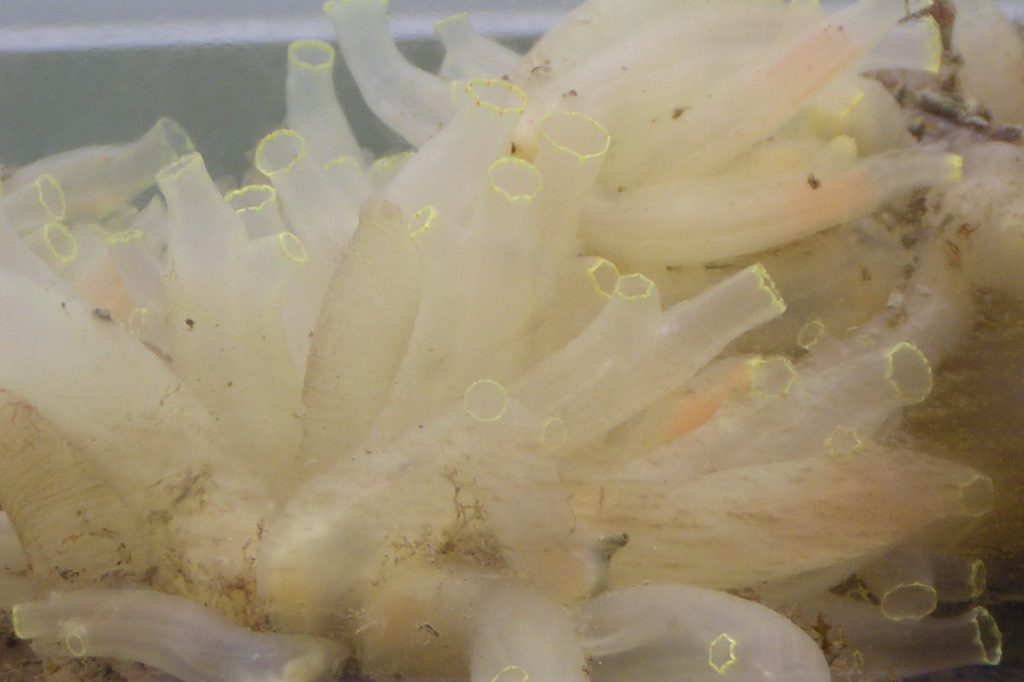
A toxin harvested from a tiny sea creature collected off Antarctica has killed melanoma in mice without harming the mice. That fact is the thin edge of a very long wedge. It means researchers at the University of South Florida believe they have a legitimate candidate for a new drug against the deadliest form of skin cancer.
But between that hopeful lab result and a prescription a doctor can write lies a decade or more of work, millions of dollars, and a high probability of failure. The creature in question is an ascidian — a filter-feeding invertebrate known as a sea squirt.
Divers from USF spent six weeks in one of the most remote places on Earth to get them. They descended to depths of 130 feet, staying for roughly half an hour at a time. The National Science Foundation paid for the expedition.
The conditions were brutal, according to Ben Meister, a USF professor who served as the diving safety officer. Why go to all that trouble?
Sea squirts produce toxins to ward off predators. Bill Baker, a USF chemistry professor, and his team have been working to repurpose those toxins into weapons against cancer cells. The compound they developed has now shown it can kill melanoma in mice without killing the mice themselves.
“The good news is it didn’t kill the mice,” Baker said. “It did kill their cancer, so we know it has the physiological properties to act like a drug.” That is a real milestone. Many compounds kill cancer cells in a petri dish.
Far fewer work in a living animal without poisoning it. This one did.
But the distance from a mouse to a human is vast. Baker laid out the next steps plainly. The team needs grams of the compound — not the tiny amounts used in initial tests — to run larger studies in mice.
If those go well, they move to other animal models. Only after proving safety there can they even begin to think about human trials.
Those human trials, if they ever start, will be strictly regulated and will expand in stages. Each stage takes years. Each stage costs money.
Each stage can fail. The compound that looked so promising in mice might prove toxic in dogs or monkeys. It might not work in people at all.
Or it might work for a subset of patients but not others. The path from here to a drug on the market is not a straight line.
It is a maze with dead ends. For melanoma patients, the implications are real but distant. Melanoma kills roughly 7,000 Americans a year.
Current treatments — immunotherapy, targeted drugs, surgery — have improved survival dramatically for some patients. But not everyone responds.
Not everyone can tolerate the side effects. A new weapon, especially one built from a completely different biological source, could be a lifeline for those who have run out of options. For investors, the calculus is different.
A compound that works in mice is a lottery ticket. It is not a sure thing. It is not even close.
The company that eventually licenses this technology will face years of expensive trials with no guarantee of approval. The payoff could be enormous if the drug works.
But the odds are long. Baker and his team are scientists, not hype men. They are focused on getting the grams of material they need for the next round of tests.
For now, the sea squirt has done its part. It produced a toxin.
The toxin killed cancer in mice. The rest is up to the researchers, the regulators, and the long, grinding process of drug development. Nobody is saying this is a cure.
But it is a start — a real, measurable start — and that is more than most ideas ever become.
{“@context”: “https://schema.org”, “@type”: “NewsArticle”, “headline”: “Antarctic sea creature toxin shows melanoma-killing potential in mouse study”, “description”: “A toxin harvested from a tiny sea creature collected off Antarctica has killed melanoma in mice without harming the mice. That fact is the thin…”, “datePublished”: “2026-06-29T14:38:00+00:00T09:30:00+00:00”, “author”: {“@type”: “Person”, “name”: “Noah King”}, “publisher”: {“@type”: “Organization”, “name”: “InfoPulse Today”, “url”: “https://newsfeed.infopulsetoday.com/”}}




