
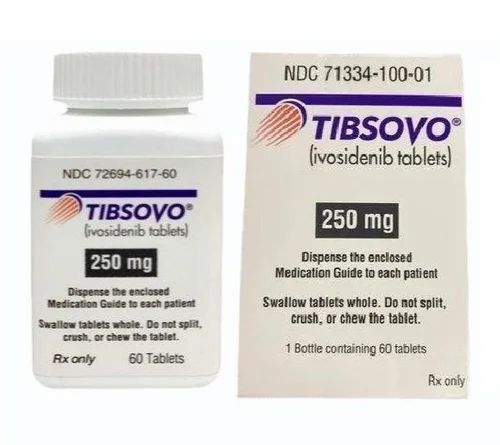
Ivosidenib, marketed under the brand name Tibsovo, has marked a significant milestone in the treatment of certain types of cancer, including acute myeloid leukemia (AML) and cholangiocarcinoma, as of May 15, 2023. This anti-cancer medication functions as a small molecule inhibitor of isocitrate dehydrogenase-1 (IDH1), an enzyme that is mutated in several forms of cancer. By inhibiting this enzyme, ivosidenib decreases the abnormal production of the oncometabolite 2-hydroxyglutarate (2-HG), which in turn leads to the differentiation of malignant cells, offering a new avenue for treatment.
The mechanism of action of ivosidenib is rooted in its ability to target the IDH1 mutation, which is present in various cancer types. By specifically inhibiting the mutated IDH1 enzyme, ivosidenib reduces the levels of 2-HG, a metabolite that can promote cancer growth and proliferation.
This targeted approach allows for a more precise treatment strategy, potentially reducing the harm to healthy cells and improving patient outcomes. The differentiation of malignant cells induced by ivosidenib is a critical aspect of its therapeutic effect, as it can lead to the reduction of cancerous cell populations and the alleviation of disease symptoms. Ivosidenib was first approved for medical use in the United States in July 2018, marking a significant step forward in the treatment of AML and cholangiocarcinoma.
The US Food and Drug Administration (FDA) recognized ivosidenib as a first-in-class medication, highlighting its innovative mechanism of action and potential to address unmet medical needs in oncology. This approval was a testament to the ongoing efforts to develop targeted therapies that can more effectively treat cancer while minimizing side effects.
As of May 2023, ivosidenib has also been approved for medical use in the European Union, further expanding access to this treatment option for patients with AML and cholangiocarcinoma. This approval underscores the growing recognition of ivosidenib’s therapeutic value and its potential to improve outcomes for patients with these challenging cancers. The European Union’s approval process involves a rigorous evaluation of the medication’s safety and efficacy, ensuring that ivosidenib meets the highest standards of quality and effectiveness.
Clinical Significance and Future Directions
The approvals of ivosidenib in the United States and the European Union represent significant milestones in the clinical development of this medication. As a first-in-class IDH1 inhibitor, ivosidenib has paved the way for further research into the therapeutic potential of targeting metabolic enzymes in cancer. Ongoing and future clinical trials will be crucial in fully elucidating the benefits and limitations of ivosidenib, as well as exploring its potential in combination with other therapies to enhance treatment outcomes.
Looking ahead, it will be important to monitor the real-world effectiveness of ivosidenib in treating AML and cholangiocarcinoma, as well as its potential application in other cancer types where IDH1 mutations are present. Additionally, the development of resistance to ivosidenib and strategies to overcome such resistance will be key areas of investigation.
As the field of oncology continues to evolve, medications like ivosidenib are likely to play an increasingly important role in the treatment arsenal against cancer, offering new hope for patients and their families.




