
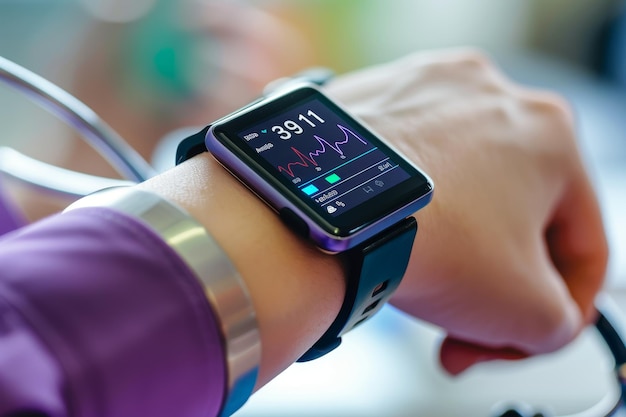
WASHINGTON, September 3 — The clinical-grade wearables market is on track to grow substantially over the coming decade, with new forecasts showing a jump from USD 158.2 billion in 2026 to USD 617.9 billion by 2035. The projection, published last month by research firm GMIPulse, frames the sector’s compound annual growth rate at 16.3 per cent from 2026 to 2035 — a figure that reflects something more interesting than the usual hardware refresh cycle. Under the hood, the technical reality is an expanding monitoring burden.
Chronic disease prevalence is pulling demand forward faster than device replacement alone would justify. The International Diabetes Federation counted 589 million adults aged 20-79 living with diabetes globally in 2024.
That figure is projected to reach 853 million by 2050. Meanwhile, the World Health Organization estimates 1.4 billion adults aged 30-79 have hypertension, with only 23 per cent of those cases under control. The gap between diagnosed patients and managed care is, as ever, the detail that matters — and it is driving investment in sensor-enabled devices that can operate outside hospital walls.
What ‘Clinical-Grade’ Actually Means
GMIPulse’s report, identified as GMI3509, draws a sharp distinction between clinical-grade wearables and the consumer wellness trackers that dominate retail shelves. The former category requires medical validation, regulatory authorization for defined indications, secure data transmission, and integration into care workflows. Their commercial relevance hinges on clinical performance, not step counts or sleep scores.
These devices are used for physiological monitoring, diagnosis, disease management, treatment follow-up, and remote care. The forecast underscores their emerging role in addressing chronic disease management and remote patient monitoring as healthcare systems strain under rising caseloads.
Market Structure and Geography
Abbott Laboratories held over 20 per cent market share in 2025, making it the sector leader. The top five players — Abbott Laboratories, Dexcom, Medtronic, Koninklijke Philips N.V., and Masimo — collectively controlled 60 per cent of the market that year. Concentration at the top is pronounced, though technological advancement in sensor accuracy, data security, and regulatory approvals is creating entry points for broader clinical adoption.
North America remains the largest regional market. Asia Pacific is the fastest-growing region — a pattern that typically signals where the next wave of manufacturing scale and regulatory innovation will emerge.
What Follows
The report, available in PDF, Excel, Dashboard, and Platform formats with prices starting at $2,450, carries implications beyond the investment spreadsheet. If the trajectory holds, the integration of wearable devices into standard medical care could reduce hospital visits and enable continuous health tracking for chronic conditions — a structural shift in how healthcare systems allocate capacity. The technical reality, lightly sketched: a market growing not because people want new gadgets, but because the old model of periodic clinical encounters cannot scale to the epidemiology.
The next moves to watch are regulatory — which jurisdictions streamline approval for remote monitoring indications, and which sensor platforms prove robust enough to earn clinician trust at scale.




