
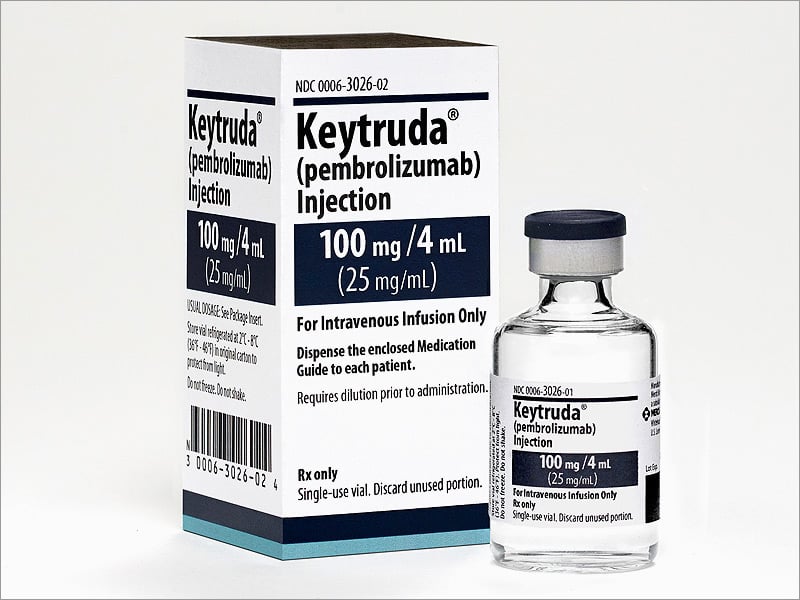
United States, September 18, 2025 — cybernewschronicle.com — Pembrolizumab, a humanized monoclonal antibody sold under the brand name Keytruda, has been a crucial component in cancer immunotherapy, treating various types of cancer. As of September 15, 2025, this medication has been administered through slow intravenous injection, providing a significant advancement in the field of oncology. Pembrolizumab is an IgG4 isotype antibody that functions by blocking a protective mechanism of cancer cells, thereby allowing the immune system to destroy them.
The mechanism of action of pembrolizumab involves targeting the programmed cell death protein 1 (PD-1) receptor of lymphocytes. By inhibiting this receptor, pembrolizumab enables the immune system to recognize and attack cancer cells more effectively.
This PD-1 inhibitor has been approved for medical use in the United States since 2014, demonstrating its established role in cancer treatment. Furthermore, pembrolizumab is included on the World Health Organization’s List of Essential Medicines, highlighting its importance in global healthcare.
Common Side Effects and Administration
While pembrolizumab has shown significant promise in treating various types of cancer, it is not without common side effects. Patients administered with pembrolizumab may experience fatigue, musculoskeletal pain, decreased appetite, itchy skin, diarrhea, nausea, rash, fever, cough, difficulty breathing, constipation, pain, and abdominal pain. It is essential for healthcare professionals to monitor patients closely and manage these side effects to ensure the safe and effective use of pembrolizumab.
In addition to its standalone use, pembrolizumab has also been developed in combination with other medications. A notable example is the fixed-dose combination of pembrolizumab and berahyaluronidase alfa, marketed as Keytruda Qlex.
This combination was recently approved for medical use in the United States, as of September 2025. The approval of Keytruda Qlex represents a continued effort to enhance cancer treatment options and improve patient outcomes.
Clinical Significance and Future Directions
The development and approval of pembrolizumab and its combinations, such as Keytruda Qlex, underscore the ongoing progress in cancer immunotherapy. As research continues to uncover the complexities of cancer biology, targeted therapies like pembrolizumab play a vital role in advancing treatment paradigms. The inclusion of pembrolizumab on the World Health Organization’s List of Essential Medicines serves as a testament to its clinical significance and potential to improve global health outcomes.
Looking ahead, it will be essential to monitor the continued development and approval of cancer immunotherapies, including pembrolizumab and its combinations. As the field of oncology continues to evolve, healthcare professionals, researchers, and patients alike will be watching for new advancements and approvals that may further improve cancer treatment options.
With its established role in cancer immunotherapy and ongoing developments, pembrolizumab is likely to remain a critical component in the fight against cancer, and its progress will be closely followed in the months and years to come.
{“@context”: “https://schema.org”, “@type”: “NewsArticle”, “headline”: “Pembrolizumab”, “description”: “Pembrolizumab, a humanized monoclonal antibody sold under the brand name Keytruda, has been a crucial component in cancer immunotherapy, treating various types of cancer. As…”, “datePublished”: “2025-09-15T09:30:00+00:00”, “author”: {“@type”: “Person”, “name”: “Isabella Moore”}, “publisher”: {“@type”: “Organization”, “name”: “InfoPulse Today”, “url”: “https://newsfeed.2bme.xyz/”}, “image”: “https://upload.wikimedia.org/wikipedia/commons/9/98/Pembrolizumab_5DK3.png”}




