
The Biology and History of a Rare Cancer
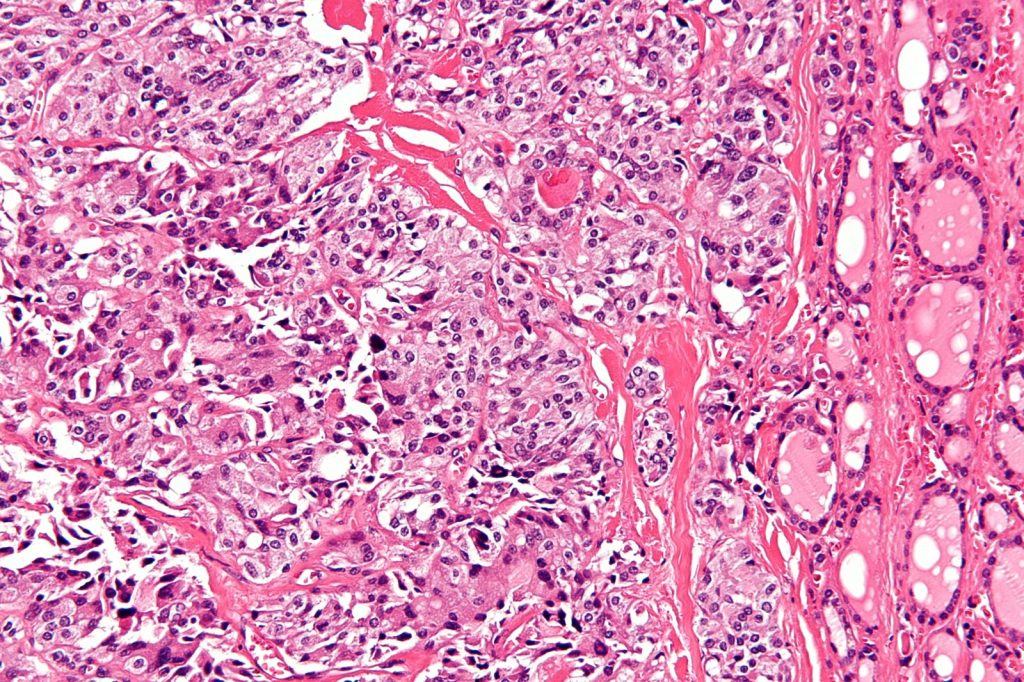
Medullary thyroid carcinoma, or MTC, arises from the parafollicular C-cells of the thyroid gland — a distinct origin from the more common papillary and follicular thyroid cancers. These C-cells produce calcitonin, a hormone that serves as a sensitive biomarker for the disease. The cancer was first described as a separate clinical entity in the mid-twentieth century, and researchers later discovered that a substantial share of cases run in families. That insight reshaped the medical understanding of the disease.
The genetic basis of inherited MTC was pinpointed in the early 1990s: mutations in the RET proto-oncogene. These inherited mutations occur as part of multiple endocrine neoplasia type 2 syndromes. The discovery enabled doctors to screen relatives of patients and, in carriers, perform preventive removal of the thyroid before cancer develops. Sporadic cases, which constitute the majority of MTC diagnoses, result from acquired mutations in the same gene.
Surgery has long been the mainstay of treatment. Complete removal of the thyroid and nearby lymph nodes offers the best chance for cure when the disease is caught early. But MTC is often diagnosed only after it has already spread to other parts of the body. Conventional chemotherapy and external radiation have shown limited effectiveness against advanced disease. For patients with metastatic MTC, outcomes were poor for decades, and care often amounted to little more than watchful waiting.
The development of targeted therapies marked a turning point. Drugs that inhibit the RET protein — first multikinase inhibitors and later more selective RET inhibitors — provided new ways to slow tumor growth. These precision medicines attack the specific molecular driver of the cancer rather than applying a one-size-fits-all approach. Clinical trials have expanded the range of available treatments, and regulatory approvals have followed.
A Pipeline of Precision Medicines Takes Shape
Today, the medullary thyroid cancer market is seeing a surge of activity. According to the latest industry analysis, opportunities are emerging from diverse pipeline developments by eight or more pharmaceutical and biotechnology firms. The focus is squarely on novel therapies — drugs engineered to take aim at the cancer through mechanisms that existing treatments cannot match.
Several companies are advancing candidates that target specific genetic mutations common in MTC. These are not blanket solutions; they are designed for the biology of each patient’s tumor. No single drug has yet emerged as a clear winner from the ongoing research. But the sheer number of players, ranging from established pharmaceutical houses to nimble biotech startups, points to a field that is both vibrant and competitive.
For families in Asia, where thyroid cancer rates have been rising, this competition matters. Although medullary thyroid cancer accounts for only a small fraction of all thyroid cancers, it is more aggressive and harder to treat. The diagnosis can feel isolating for families in the region. But the pipeline offers a reason for attention and hope.
Competition among drug developers is, for patients and their families, a positive force. It drives innovation and, over time, can push down cost, potentially improving affordability. For now, researchers convey a message of cautious optimism. The next few years will be critical as these drugs move through clinical trials. For communities watching and waiting across Asia, every new data point provides a reason to pay close attention.
{“@context”: “https://schema.org”, “@type”: “NewsArticle”, “headline”: “Rare thyroid cancer’s biology and inherited risks uncovered”, “description”: “The Biology and History of a Rare Cancer Medullary thyroid carcinoma, or MTC, arises from the parafollicular C-cells of the thyroid gland — a distinct…”, “datePublished”: “2026-07-03T09:30:00+00:00”, “author”: {“@type”: “Person”, “name”: “Sebastian Smith”}, “publisher”: {“@type”: “Organization”, “name”: “InfoPulse Today”, “url”: “https://newsfeed.infopulsetoday.com/”}}




