
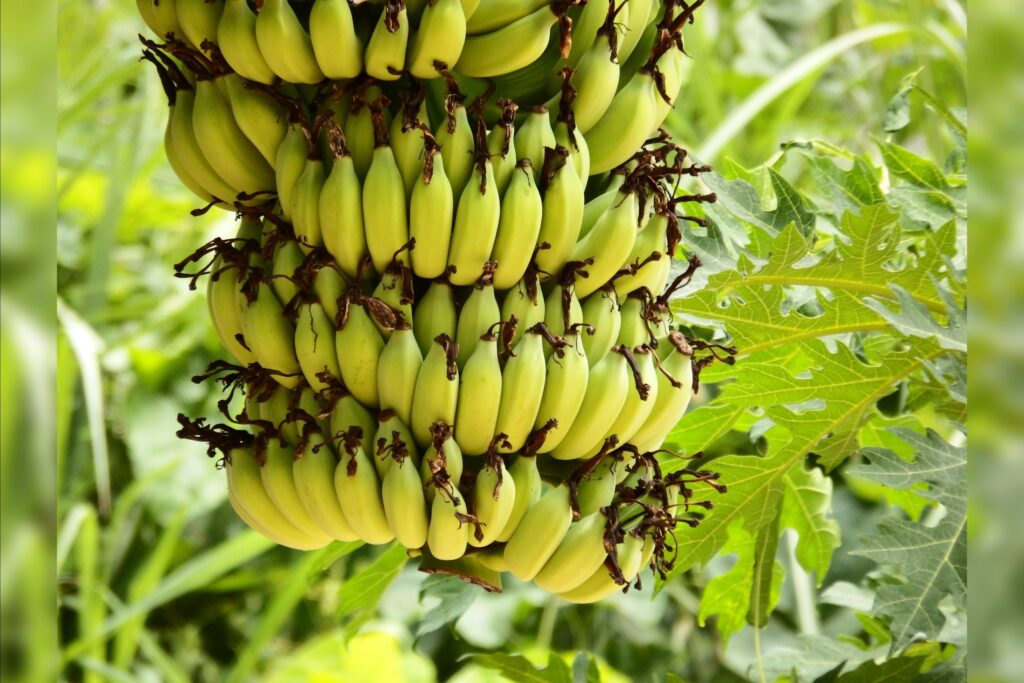
The humble green banana has been hiding in plain sight. For years, it was the fruit you passed over, the one left behind in the office fruit bowl because it was “not ready yet.” Now, a closer look at the starch inside suggests that judgment was premature. The green banana, it turns out, is not simply an unripe version of its yellow self.
It is a fundamentally different food, with a different metabolic job to do. The key is resistant starch.
This is a type of carbohydrate that behaves nothing like the starch in a ripe banana. Instead of breaking down quickly in the small intestine and flooding the bloodstream with sugar, resistant starch passes through undigested. It travels down to the large bowel, where it ferments.
That fermentation feeds beneficial gut bacteria. The practical effect is a slower release of glucose.
For anyone managing insulin response or just trying to avoid an energy crash after lunch, that difference matters. Here is the force behind the story. The nutritional mechanism is well-established in food science literature.
What has changed is the public conversation. People are paying more attention to glycemic index, to blood sugar spikes, to the role of gut bacteria. The green banana fits neatly into that shift.
It offers a metabolic profile that is almost the opposite of the sweet, soft yellow banana. The very process that makes a banana taste good — the conversion of starch into sugar as it ripens — is the same process that makes it less ideal from a blood sugar standpoint.
The green banana skips that step. It is not a mistake. It is a different product.
Where this is likely to lead is a slow but real change in how people shop. The office fruit bowl may still be full of yellow bananas.
But the health-conscious consumer, the person managing a condition like prediabetes or just trying to keep energy steady, may start grabbing the green ones. The experts behind this latest push are not named in the source material. That anonymity is itself a detail.
It suggests the information is not coming from a single study or a single institution. It is a broader, more diffuse message from the food science community. The green banana is being repositioned, not discovered.
The resistant starch content declines as the banana ripens. That is a simple, unavoidable fact of biology.
The green banana is a window of opportunity, one that closes with time. For the consumer, the choice becomes strategic. Do you want the immediate sweetness of the yellow banana, or the slower, steadier energy of the green one?
The answer depends on what you are trying to do with your body. The source material does not provide specific figures on resistant starch content.
It does not offer comparative data against other starches. But the mechanism is clear enough. The green banana is not a gimmick.
It is a legitimate option for a specific cohort of people. The wry observation that the fruit people ignore may actually be the more technically interesting option is not just a clever line. It is the point.
The green banana has been waiting for its moment. That moment may have arrived.
{“@context”: “https://schema.org”, “@type”: “NewsArticle”, “headline”: “Green Banana’s Resistant Starch Offers Unique Health Benefits, Study Finds”, “description”: “The humble green banana has been hiding in plain sight. For years, it was the fruit you passed over, the one left behind in the…”, “datePublished”: “2026-06-27T09:42:00+00:00T09:30:00+00:00”, “author”: {“@type”: “Person”, “name”: “Maria Romano”}, “publisher”: {“@type”: “Organization”, “name”: “InfoPulse Today”, “url”: “https://newsfeed.2bme.xyz/”}}




