
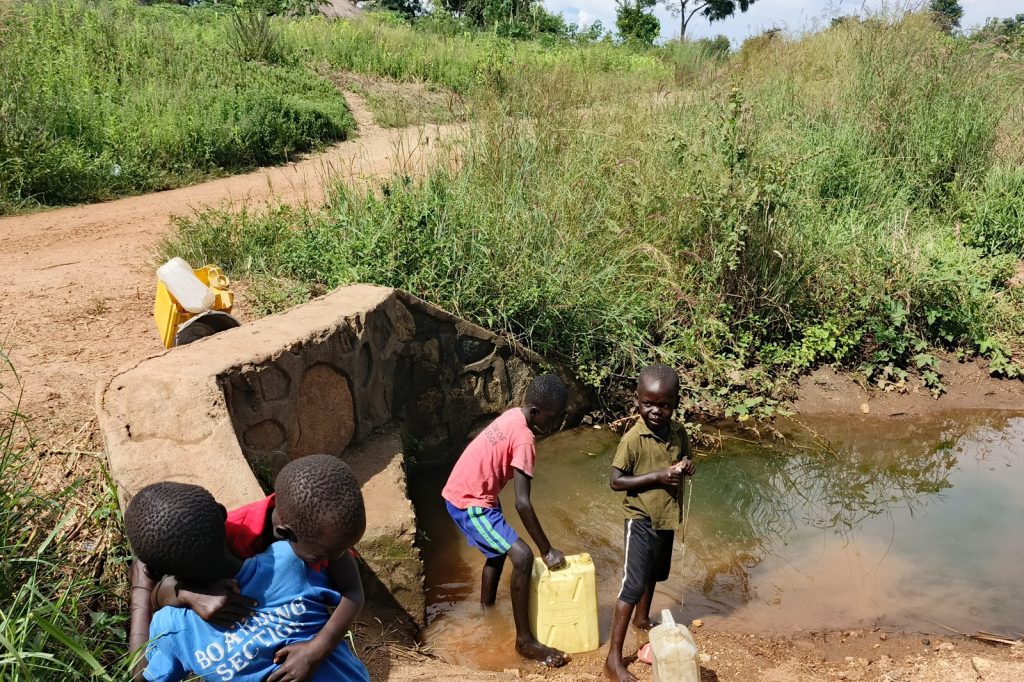
The scale of the global water crisis is captured in figures collected by the United Nations, the World Health Organization, and the World Resources Institute. As of 2020, 2.2 billion people worldwide lack access to safely managed drinking water, while 785 million people do not have even basic drinking water services.
The World Health Organization adds that 2 billion people are consuming water contaminated with feces. These numbers are not abstract statistics; they represent daily hazards for billions of people whose health, education, and livelihoods depend on the availability of clean water.
Projected Stress and Economic Consequences
The World Resources Institute’s Aqueduct Water Risk Atlas projects that by 2040, more than 600 million children — one in four globally — will be living in areas classified as having extremely high water stress. The burden falls unevenly.
Parts of South Asia, including Pakistan, are expected to fall into the highest stress categories. The World Bank warns that water scarcity could cost some regions up to 6 percent of their gross domestic product by 2050, a blow that would ripple through agriculture, industry, and municipal services. Agriculture is the dominant consumer of freshwater.
According to the Food and Agriculture Organization, farming accounts for 70 percent of all freshwater withdrawals worldwide. Industry uses 19 percent, and municipal use accounts for 11 percent.
This heavy reliance on irrigation and livestock production means that any shortfall in water availability directly threatens food supplies and rural economies. When water quality is also degraded, the consequences compound: crops fail, diseases spread, and communities are forced to ration an already insufficient supply.
Global Response and Market Growth
The United Nations adopted Sustainable Development Goal 6 in 2015, setting a target of universal access to safe drinking water by 2030. The deadline is fast approaching, and the gap between aspiration and reality remains wide.
The next UN progress report on SDG 6, expected in the coming months, will reveal whether the world is on track or falling further behind. For now, the data suggests that the 2030 target will be difficult to meet without a significant acceleration of investment and policy action. That investment is already underway.
The global water and wastewater treatment market was valued at $281.6 billion in 2020 and is projected to reach $474.4 billion by 2028. The International Desalination Association reports that desalination capacity has grown at an average of 8 percent per year since 2010.
Desalination plants are multiplying, particularly in arid and water-stressed regions. Governments and private investors are pouring money into infrastructure, but the scale of the challenge is enormous, and the 2030 deadline leaves little room for delay.
Historical Patterns and Current Urgency
Water crises are not a new phenomenon. The past two decades have seen severe water emergencies on nearly every continent.
In the United States, the city of Flint, Michigan, experienced a public health disaster after a change in water source led to lead contamination. Cape Town, South Africa, narrowly avoided what officials called “Day Zero,” when municipal taps would have been shut off. In Chennai, India, reservoirs ran dry in the middle of a scorching summer.
Chile’s Petorca region has faced prolonged shortages linked to agricultural overuse. Each event follows a similar pattern: a combination of drought, population growth, poor planning, and aging pipes.
Why does this matter now? The world’s population continues to rise, and climate change is altering rainfall patterns. Many regions that were once water-rich are becoming drier.
At the same time, demand for food puts enormous pressure on freshwater supplies. Agriculture uses the lion’s share of water drawn from rivers and aquifers, and industry and cities also compete for the same limited resources.
The poorest communities often suffer first and worst. Without reliable access to clean water, children miss school, farmers lose crops, and hospitals cannot operate properly. Understanding how these crises develop and what can be done to prevent them is essential for anyone who depends on the simple act of turning on a tap.




