
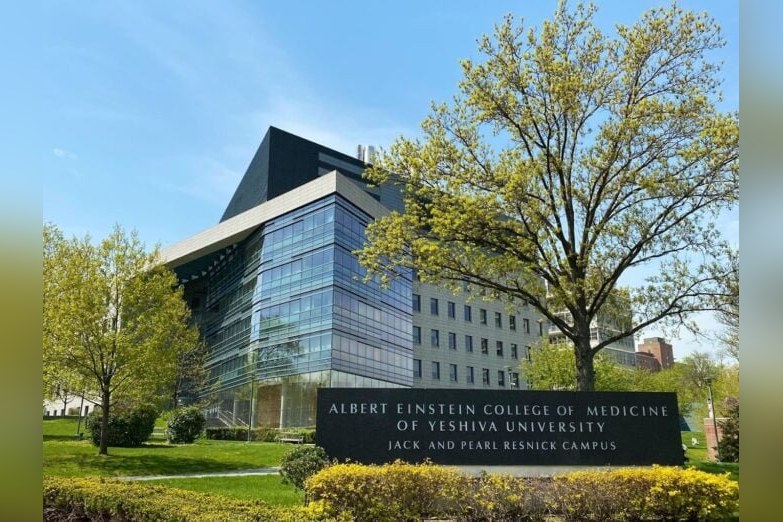
NEW YORK, July 8 — The biology of extreme old age has a meticulous chronicler in Nir Barzilai, the Israeli-American geneticist who directs the Institute for Aging Research at the Albert Einstein College of Medicine. For the better part of two decades, Barzilai has been pulling apart the genetic wiring that allows some people to reach 95 and beyond, and his work is now converging on a practical question: can drugs already sitting on pharmacy shelves replicate that biology in the rest of us?
Barzilai earned his MD from the Technion-Israel Institute of Technology in 1978 and completed his residency at the Sheba Medical Center in Israel. He joined Einstein in New York City, where he now leads two major studies that approach longevity from complementary angles.
The LonGenity study, launched in 2008, follows more than 500 Ashkenazi Jewish individuals aged 95 and older, a genetically homogeneous population that offers a clean signal for identifying the variants that correlate with exceptional survival. The other, the TAME trial — Targeting Aging with Metformin — began enrolling participants in 2016 and aims to recruit about 3,000 people aged 65 to 79.
TAME is funded by the American Federation for Aging Research and the National Institute on Aging, and it represents a conceptual shift: instead of treating individual age-related diseases, the trial tests whether metformin, a common diabetes drug, can delay the onset of the whole cluster of them.
The HDL connection
The detail that matters in Barzilai’s early work is cholesterol. In 2003, he published a study in the Journal of the American Medical Association showing that centenarians and their offspring have higher levels of high-density lipoprotein (HDL) cholesterol — the so-called good cholesterol. That finding suggested that lipid metabolism, specifically the body’s ability to clear and recycle cholesterol efficiently, is one of the under-the-hood mechanisms that distinguish people who age slowly from those who do not.
The technical reality is that HDL is not a single particle but a family of them, and the centenarians appear to have a particular subspecies that is especially proficient at removing arterial plaque and tamping down inflammation.
Barzilai has authored over 200 peer-reviewed articles and the 2020 book “Age Later: Health Span, Life Span, and the New Science of Longevity.” In that book, he lays out the case that aging itself is the largest risk factor for most chronic diseases — heart disease, cancer, Alzheimer’s, type 2 diabetes — and that intervening in the biology of aging could prevent all of them simultaneously. It is a thesis that has gained mainstream traction, but Barzilai has been pursuing it since before it was fashionable.
The TAME trial
The TAME trial is the most concrete expression of that thesis. Metformin was chosen because it has a long safety record, is inexpensive, and appears to have off-target effects on pathways that regulate aging, including AMPK activation and mTOR inhibition. The trial is not designed to show that metformin extends lifespan in healthy older adults — that would take decades — but rather to demonstrate that it delays the onset of a composite endpoint that includes cardiovascular events, cancer, dementia, and death.
If the trial succeeds, it would provide regulatory precedent for the FDA to approve a drug for the indication of “aging” itself, which is currently not a recognized disease. The American Federation for Aging Research awarded Barzilai the Irving S.
Wright Award in 2010, recognizing his contributions to the field. That award is named for one of the founders of modern gerontology, and it places Barzilai in a lineage of researchers who have insisted that aging is not an inevitable decline but a modifiable biological process.
What the centenarians teach us
The LonGenity study, as ever, provides the genetic baseline. By studying Ashkenazi Jews aged 95 and older, Barzilai’s team has identified variants in genes such as CETP, which regulates HDL cholesterol levels, and FOXO3A, which is involved in cellular stress resistance. These variants are enriched in the centenarian population and appear to confer protection against age-related diseases even when the carriers have lifestyle habits that would otherwise be risky.
Some of the centenarians studied have smoked, consumed alcohol, or been overweight, yet they outlived their peers. The implication is that genetics can override environment, at least in the extreme tail of the survival curve.
Barzilai’s work is not about selling a pill to the worried well. It is about understanding the technical reality of why some people’s cells maintain their function for a century while others’ break down in their seventh decade. The LonGenity data suggest that the answer lies in the maintenance pathways — autophagy, DNA repair, mitochondrial function — and that these pathways are druggable.
Looking ahead
As of mid-2026, the TAME trial continues to collect data. The study is not yet complete, and Barzilai has been careful not to preview results. But the field is watching closely. If metformin shows even a modest delay in the onset of age-related diseases, it would open the door to a new class of drugs — geroprotectors — that target aging rather than its downstream consequences.




