
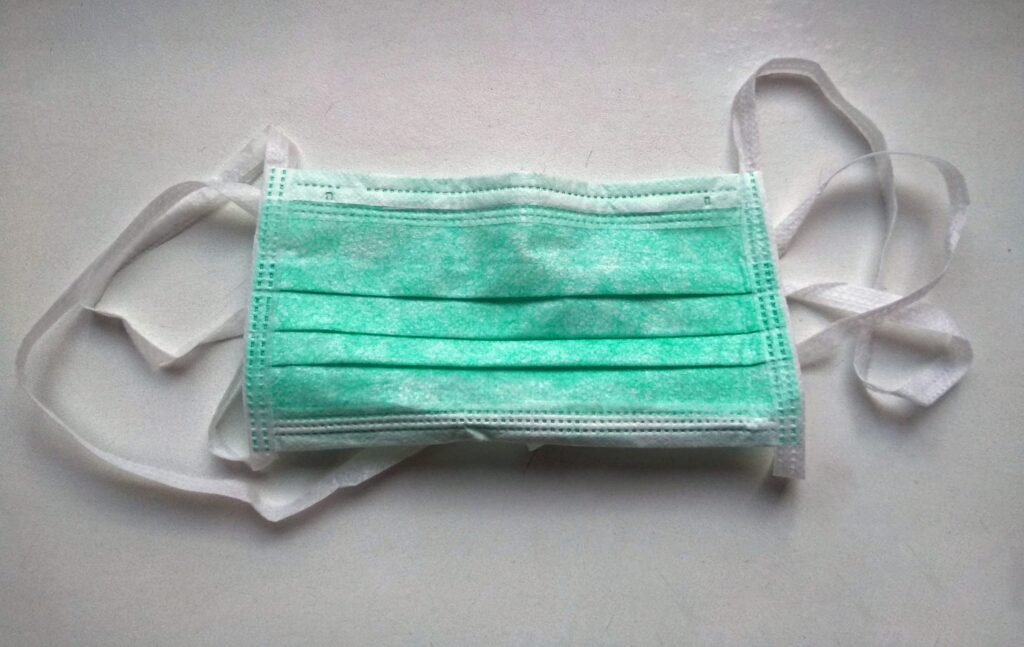
Review of Cloth Mask Effectiveness Published
A systematic review of 25 peer‑reviewed studies, led by researchers at Karolinska Institutet and McMaster University, appeared in Mayo Clinic Proceedings on 20 August 2020. The authors searched the literature up to June 2020 for any paper that measured how well woven fabrics block particles when fashioned into face coverings. They accepted laboratory experiments that used aerosol generators, smoke boxes, fit‑test rigs or coughing manikins, but they excluded modelling papers that estimated mask performance without direct filtration data.
The 25 articles examined a variety of materials, ranging from ordinary T‑shirt jersey to vacuum‑cleaner bags. Because none of the fabrics had been created to meet medical‑device standards, the investigators normalised every result to the percentage of particles stopped in the 0.2‑5 µm size range, which is believed to contain most SARS‑CoV‑2 virions.
When the data were pooled, a single layer of cotton blocked roughly 20‑40 % of fine particles. A three‑layer sandwich of cotton and flannel achieved 70‑90 % blockage, overlapping the performance reported for surgical masks. Fabric thread count proved important: materials woven to at least 100 threads per inch filtered markedly better than looser weaves. Muslin, an unfinished, tightly woven cotton, matched the filtration of a disposable medical mask when four layers were stacked.
How Masks Work Both Ways
The review treats masks as a mechanical barrier that operates in two directions: outward to protect others and inward to protect the wearer. This view rests on the fact that SARS‑CoV‑2 spreads mainly through respiratory particles. Supporting evidence includes a 2013 study in the American Journal of Infection Control that found a four‑layer muslin mask cut airborne colony‑forming units by 99 % compared with no mask, a reduction equivalent to that of a modern surgical mask.
More recent laser‑visualisation work published in the New England Journal of Medicine showed that homemade cotton masks reduced forward‑projected droplets by about 80 % at speaking distance.
Expert Commentary
Juan Jesús Carrero, professor of epidemiology at Karolinska Institutet and the review’s corresponding author, told InfoPulseToday: “We have no direct proof that face masks reduce the transmission of SARS‑CoV‑2, as this would require a randomised clinical trial that would be unethical to conduct. However, the literature we found clearly shows that face masks can reduce the spread of viruses and protect the wearer, some of them highly effectively.
This evidence should be more than sufficient to recommend their use, particularly given the difficulty in controlling the ongoing pandemic.”
Best Fabrics and Practical Tips
Muslin, standard quilting cotton and flannel emerged as the top performers. A three‑layer mask that combines one layer of tightly woven cotton with two layers of flannel removed about 85 % of particles—only ten percentage points below a certified surgical mask tested on the same rig. Poly‑cotton blends fared worse, and thin T‑shirt material needed at least four layers to push




